
9 Reasons for Divorce in the Bible
Divorce is painful and often leaves deep emotional wounds.
Many couples struggle with confusion, guilt, and heartbreak when marriage breaks down.
For people of faith, the Bible becomes a key source of guidance and reflection.
The Bible does not treat divorce lightly or casually.
It places strong value on commitment, faithfulness, and unity in marriage.
At the same time, it acknowledges human weakness and brokenness.
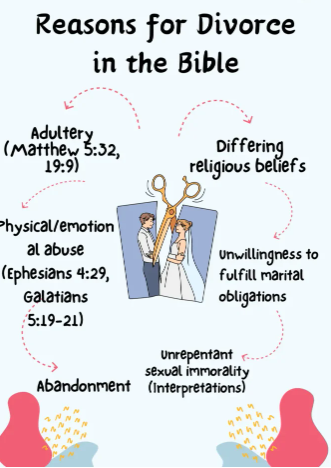
1. Adultery
When one spouse is unfaithful, trust is shattered.
Infidelity damages emotional safety, intimacy, and respect in marriage.
Jesus himself recognized adultery as a serious breach of the marriage bond.
Because of this deep betrayal, divorce may be considered.
It is seen as a painful but sometimes necessary step toward healing.
The Bible shows that faithfulness is central to marital commitment.
2. Physical or emotional abuse
The Bible calls for kindness, love, and respect in relationships.
Violence, cruelty, or constant emotional harm goes against God’s will.
Abuse destroys the dignity that marriage is meant to protect.
In such cases, separation or divorce may be needed for safety.
No one is required to remain in a dangerous situation.
Seeking help from professionals and faith leaders is important.
3. Abandonment
Abandonment happens when a spouse leaves and refuses reconciliation.
This can cause deep pain, rejection, and emotional trauma.
The Bible speaks about situations where one partner chooses to walk away.
In such cases, the abandoned spouse is not bound forever.
They are encouraged to seek peace rather than live in suffering.
Divorce can become a path toward rebuilding life.
4. Unrepentant sexual immorality

The Bible does not clearly list this as a legal ground for divorce.
However, many interpret repeated sexual sin as a serious violation of marriage.
Ongoing infidelity without remorse can break the marital covenant.
This is a sensitive and debated issue among believers.
Wise counsel from spiritual leaders is strongly recommended.
Each situation must be handled with prayer and discernment.
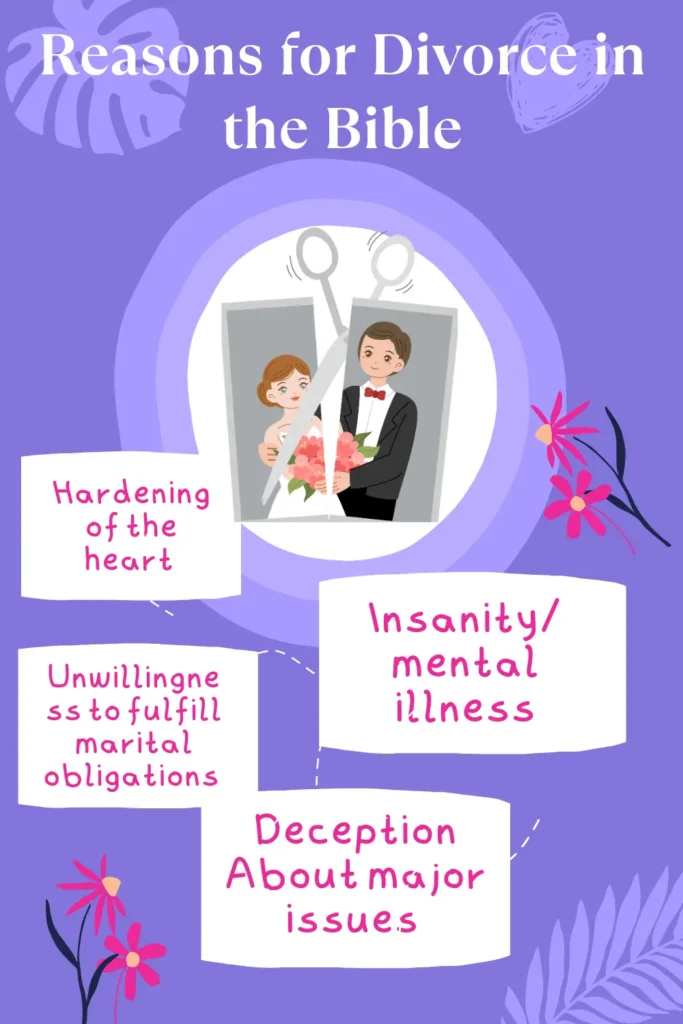
5. Deception about major issues
Lies about money, addiction, or major life matters harm trust.
When deception is serious and ongoing, marriage becomes unstable.
The Bible values honesty, integrity, and transparency.
Some believers see deep deception as a valid reason for separation.
It can create emotional harm and lasting insecurity.
Counseling is important before making final decisions.
6. Severe mental illness or insanity
The Bible does not directly address this as a reason for divorce.
However, extreme mental illness can make marriage unlivable.
Some situations may place a spouse or children at risk.
Compassion, patience, and professional help are essential.
Faith leaders and mental health experts should guide decisions.
Each case must be treated with care and sensitivity.
7. Refusal to fulfill marital duties
Marriage requires love, care, support, and responsibility.
If one spouse persistently refuses these duties, the marriage suffers.
Neglect can cause deep emotional pain and loneliness.
The Bible encourages couples to work through problems first.
Open communication and counseling should be tried.
Divorce becomes a last resort, not a first reaction.
8. Hardened heart
Jesus spoke about hardened hearts in relation to divorce.
This refers to stubbornness, lack of forgiveness, and refusal to change.
When reconciliation becomes impossible, the marriage breaks down.
Some see this as justification for divorce in extreme cases.
Others believe it is a call to work harder on forgiveness.
Spiritual guidance is needed to interpret this wisely.
9. Major religious differences
Different faith beliefs can create serious marital tension.
Conflicts about worship, values, and family life may arise.
This can weaken unity and harmony in marriage.
The Bible encourages patience and understanding in mixed-faith marriages.
However, in some cases separation may happen.
Prayer and wise counsel are crucial before any decision.
My Take
The Bible gives guidance but does not remove human complexity.
Every marriage and situation is different and deeply personal.
Faith, wisdom, and compassion must guide decisions.
If you are struggling in marriage, seek trusted counsel.
Talk to a pastor, counselor, or spiritual mentor.
Do not carry your pain alone in silence.
Above all, prioritize safety, peace, and emotional well-being.
God values life, dignity, and healing.
Even in brokenness, there is hope for restoration and growth.